Raised Bed Basics
Raised Bed Gardening Mistakes: 10 Common Errors to Avoid
Ten common raised bed errors, from beds too wide to reach across to watering by timetable, with the reason each one matters and the simple change that puts it right.
Practical Guides for Productive Raised Beds
Practical guides for planning beds, building good soil and planting vegetables and herbs at the spacing each crop needs.
New to raised beds? Read these four guides in order.
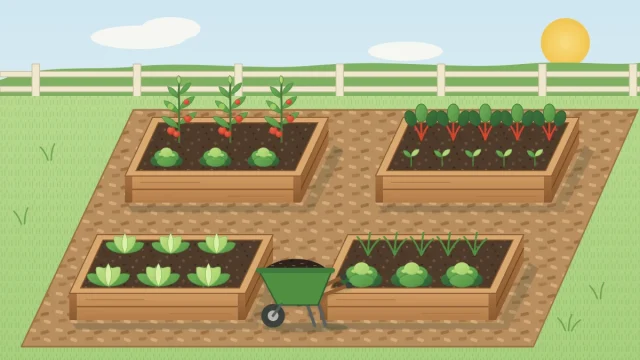
What a raised bed changes and the six decisions that matter for a first one, in order: the spot, the width, the depth, the fill, the crops and the watering habit.
A site checklist for a raised bed: sun, level ground, drainage, hose reach, distance from trees, air movement and what lies underneath, plus a one-day test before you commit.
What topsoil, compost and soilless growing mix each do in a raised bed, the blends extension services suggest for different situations, and what to leave out of the fill.
Why spacing follows the crop, the variety and its mature size, where to find the right distance for what you are planting, typical ranges for contrasting crops, and how to thin seedlings.
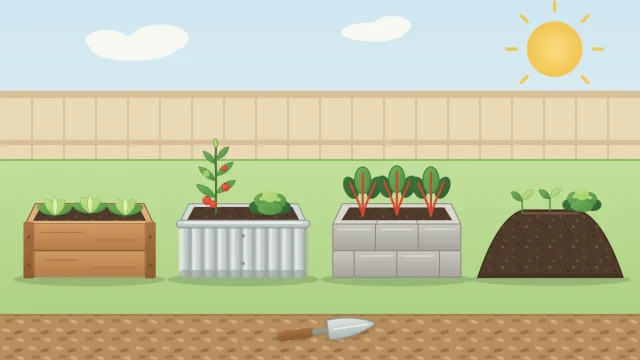
What a raised bed is, which materials to build it from and the beginner mistakes worth avoiding.
Ten common raised bed errors, from beds too wide to reach across to watering by timetable, with the reason each one matters and the simple change that puts it right.
The common frame options for a raised bed with their trade-offs: untreated and treated wood, galvanized steel, block, stone and composite, plus what extension research says about treated lumber near food.
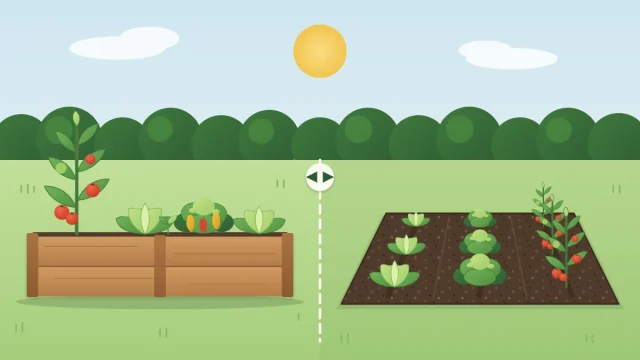
A balanced comparison of raised beds and in-ground gardens: what each does well, what each costs in money, water and effort, and how to tell which one fits your soil and plans.
What a raised bed changes and the six decisions that matter for a first one, in order: the spot, the width, the depth, the fill, the crops and the watering habit.
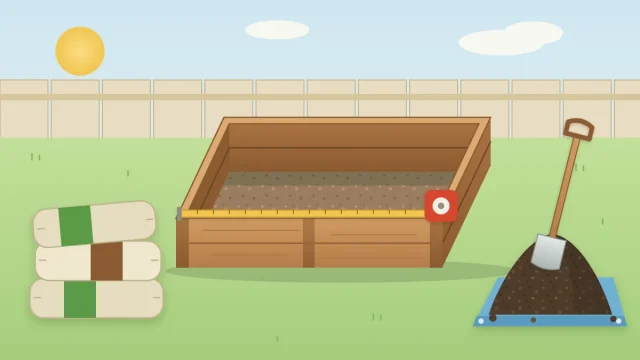
Choosing the site, checking the sun, and settling on bed size, depth, paths and layout before you build.
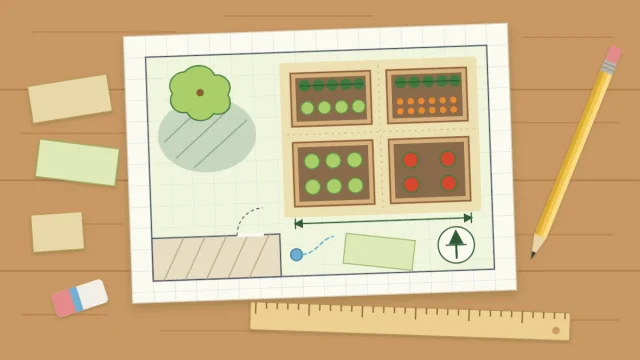
A step-by-step way to plan several raised beds on grid paper: draw the space to scale, move paper beds around, leave working paths, place tall crops, then test it with string.
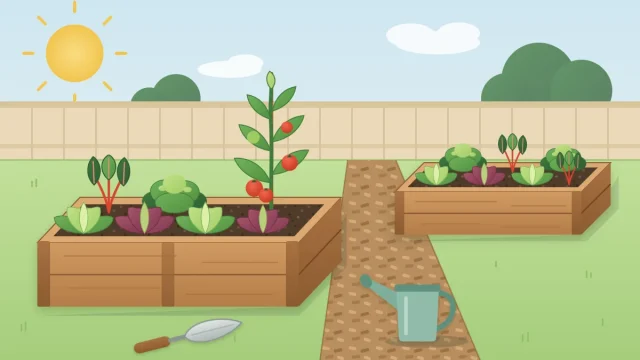
How much space to leave between raised beds, how to test a path width for kneeling and a wheelbarrow, and how wood chips, straw, gravel, grass and pavers compare.
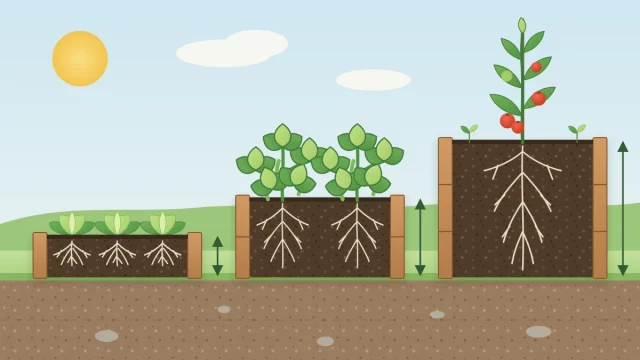
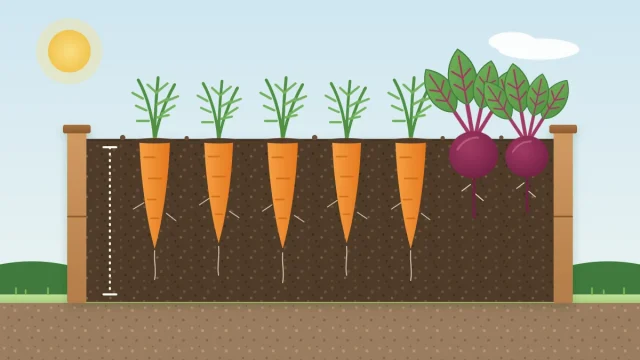
Bed depth comes down to what you grow and what is under the frame. See what extension services give for beds over soil and on hard surfaces, by crop group.
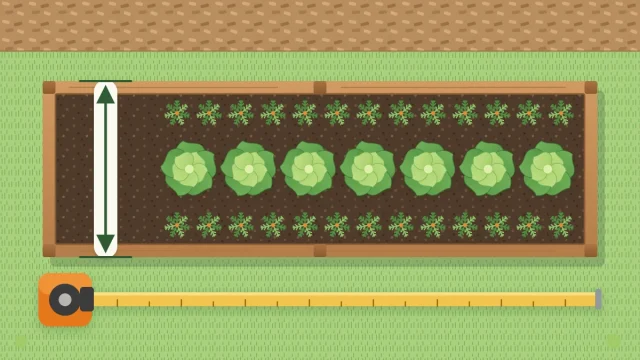
How to choose a raised bed width from your own reach, what extension services suggest for freestanding and fence-side beds, and how to decide on length and number of beds.
Filling a bed, soil mixes, compost and mulch, and keeping the soil in good shape from season to season.
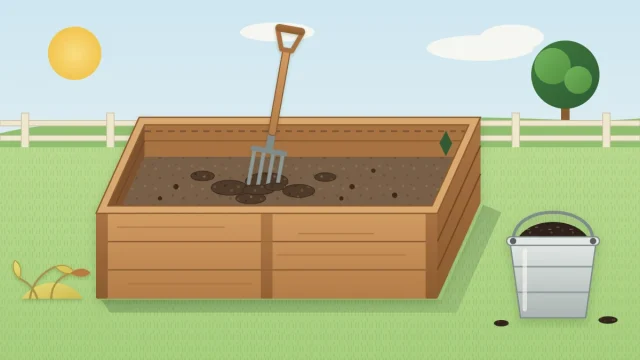
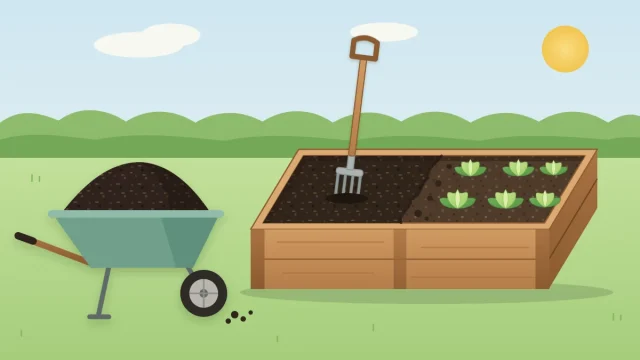
A step-by-step way to bring a settled raised bed back up: clear it, loosen the top, add compost or a compost and topsoil blend, rake, water and cover. No need to replace the soil.
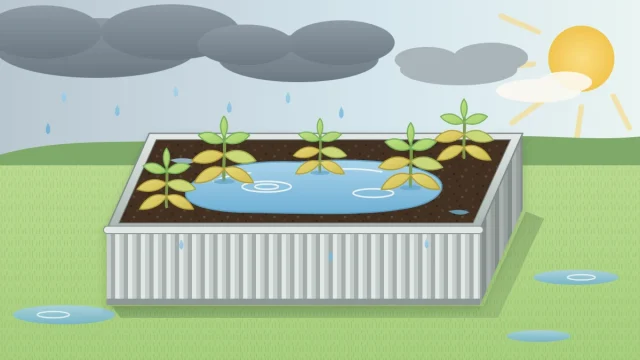
How water should move through a raised bed, the signs commonly linked to poor drainage, a simple hole test, and fixes in order of effort, plus why gravel in the bottom does not help.
What compost does in a raised bed, how to tell when it is finished, which kinds to use, and how published guidance on amounts differs depending on the soil you start with.
A worked calculation for raised bed soil volume in cubic feet, cubic yards and liters, with conversions to bags and to topsoil and compost shares.
Crop-by-crop guides to growing vegetables and herbs in a raised bed, from sowing to harvest.
How to grow straight carrots, beets and radishes in a raised bed: matching the variety to your loose soil depth, sowing and thinning, and the usual reasons roots fork.
How to keep salad leaves coming from a raised bed: which lettuce types need what room, sowing shallowly, coping with heat and bolting, two ways to harvest and sowing a little at a time.
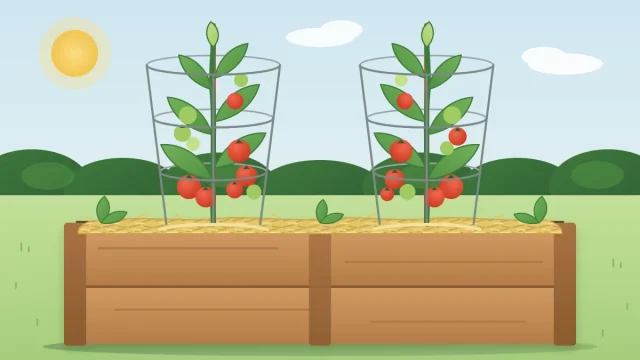
How to grow tomatoes in a raised bed: choosing between determinate and indeterminate types, giving each plant enough room, planting deep, supporting it from day one and keeping moisture even.
Twelve dependable vegetables for a first raised bed, with the season, relative space need and starting method for each, plus the crops that take a lot of room and how to decide.
When to sow and transplant, how far apart to set each crop and how to fit more into the same bed.
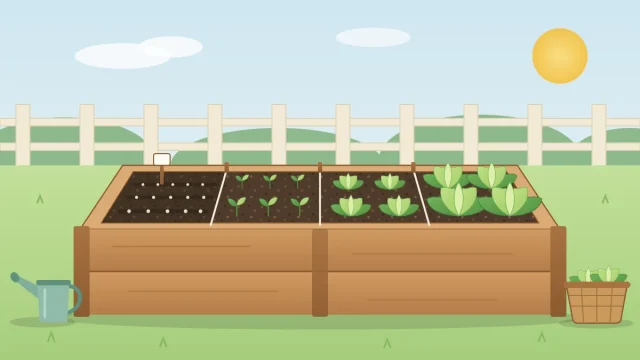
A step-by-step plan for a longer harvest from one bed: small repeat sowings of quick crops, follow-on crops for every gap, and counting back from your first fall frost.
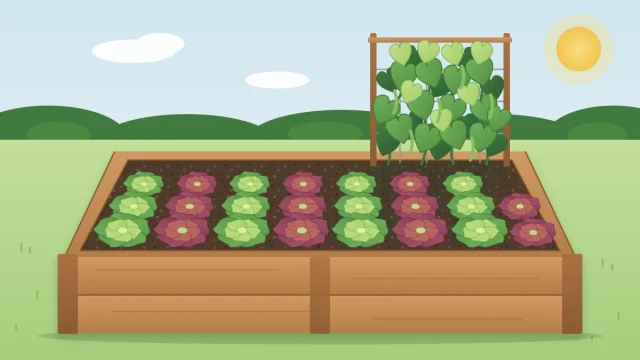
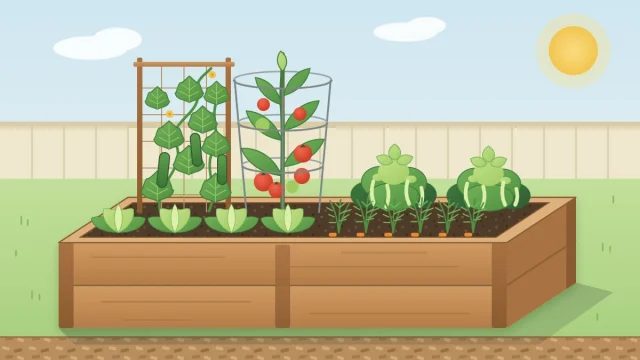
Ways to arrange plants inside one raised bed: cross-rows, grids, staggered blocks and an edge trellis, ordered from tall to short, with two example plans to adapt.
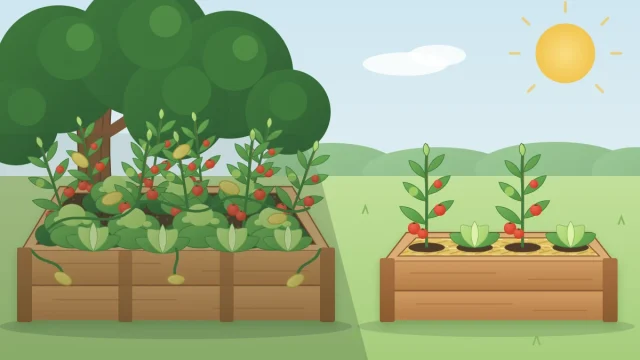
Why spacing follows the crop, the variety and its mature size, where to find the right distance for what you are planting, typical ranges for contrasting crops, and how to thin seedlings.
Step-by-step guides with a time estimate and a list of what you need.
An end-of-season routine for raised beds: harvest and clear, decide what stays, add compost, cover the soil with mulch or a cover crop, store hoses, and record what grew where.
A step-by-step spring routine for raised beds: test whether the soil is workable, clear the winter cover, check the frame, loosen, top up with compost, and time planting by frost dates and soil temperature.
A step-by-step guide to mulching a vegetable bed: which materials work, how thick a layer each one needs, when to spread it for different crops, and how to look after it through the season.
A step-by-step plan for a longer harvest from one bed: small repeat sowings of quick crops, follow-on crops for every gap, and counting back from your first fall frost.
An end-of-season routine for raised beds: harvest and clear, decide what stays, add compost, cover the soil with mulch or a cover crop, store hoses, and record what grew where.
A step-by-step spring routine for raised beds: test whether the soil is workable, clear the winter cover, check the frame, loosen, top up with compost, and time planting by frost dates and soil temperature.
Ten common raised bed errors, from beds too wide to reach across to watering by timetable, with the reason each one matters and the simple change that puts it right.
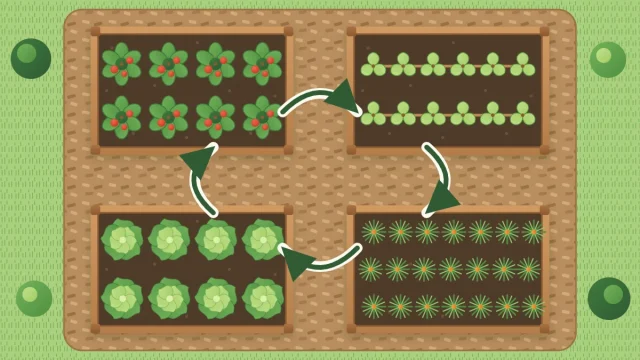
Why related crops should move to different soil each year, which vegetables belong to which plant family, a simple scheme for three or four beds, and realistic options when you have only one or two.
A step-by-step guide to mulching a vegetable bed: which materials work, how thick a layer each one needs, when to spread it for different crops, and how to look after it through the season.
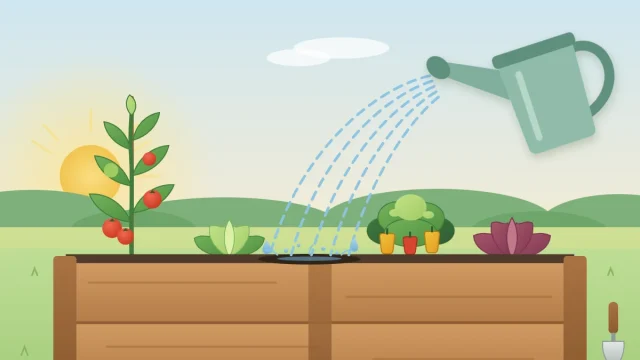
Raised beds dry faster than the ground, and no timetable fits them all. Learn what changes a bed's water needs, how to check the soil with a finger, and how to water so it reaches the roots.
Every guide is listed on one page, from planning and building a bed to soil, vegetables, and planting and spacing. All of them are free to read, with no sign-up needed.